

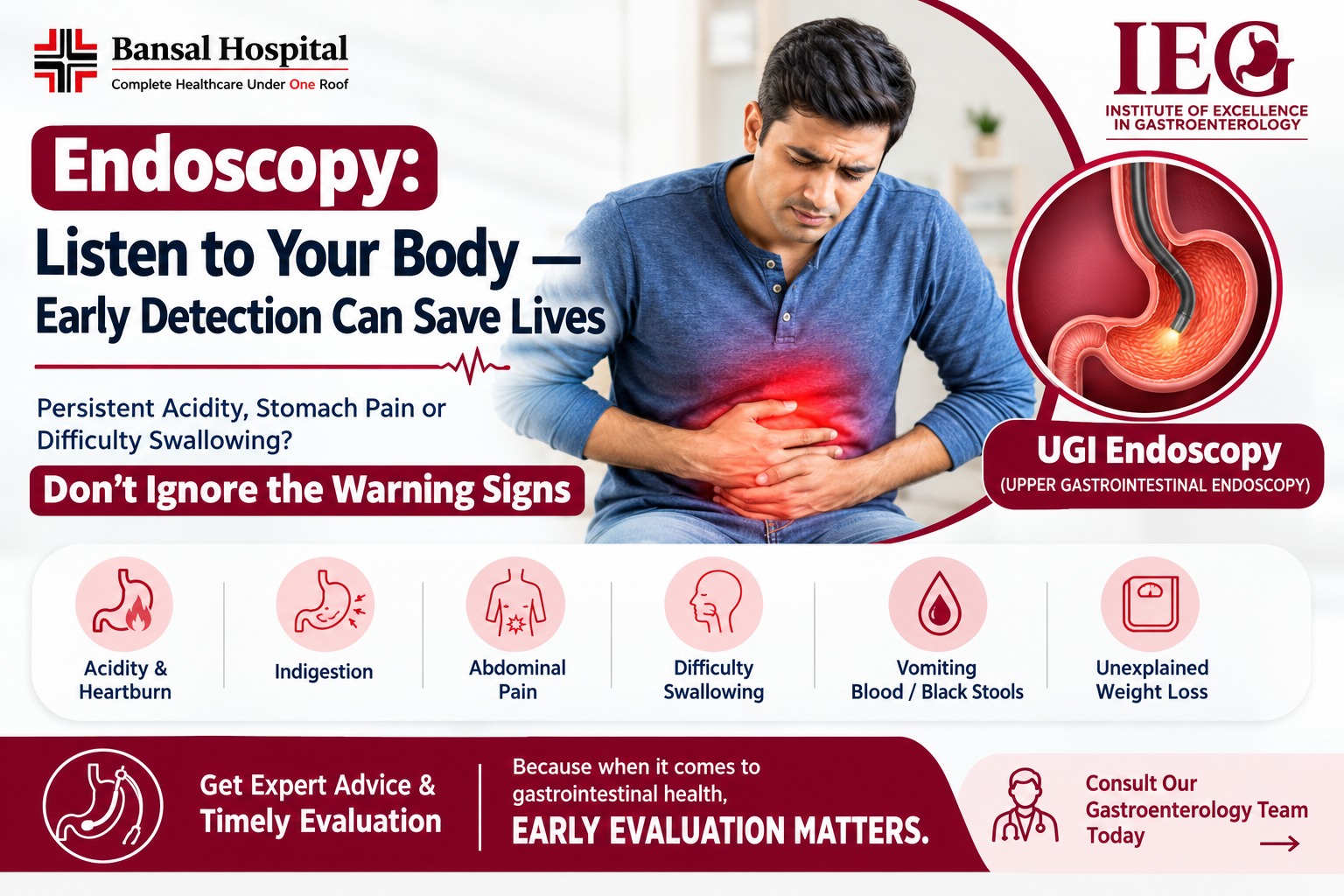
Persistent Acidity, Stomach Pain or Difficulty Swallowing? Don’t Ignore the Warning Signs
We often ignore the small signals our body gives us.
A little acidity after dinner.
Some indigestion after a heavy meal.
Occasional stomach pain.
A feeling that food is not going down properly.
We tell ourselves:
“It will get better.”
And sometimes, it does.
But when these symptoms keep coming back, become stronger, or are joined by other warning signs, they deserve medical attention.
Because when it comes to gastrointestinal health, early evaluation can make an important difference.
One of the diagnostic procedures doctors may recommend for investigating problems of the upper digestive system is UGI Endoscopy (Upper Gastrointestinal Endoscopy).
What Is UGI Endoscopy?
UGI Endoscopy is a medical procedure that allows a doctor to directly examine the upper gastrointestinal tract.
It generally involves examining:
- Oesophagus – the food pipe
- Stomach
- Duodenum – the first part of the small intestine
During the procedure, a thin, flexible instrument called an endoscope, equipped with a small camera, is guided through the mouth.
The camera allows the doctor to see the lining of the upper digestive tract and look for abnormalities that may require further evaluation.
If necessary, the doctor may also take a small tissue sample, known as a biopsy, for laboratory examination.
In simple words:
UGI Endoscopy helps doctors look inside the upper digestive tract instead of relying only on symptoms.
Why Is UGI Endoscopy Important?
Many gastrointestinal problems can have similar symptoms.
For example, acidity and abdominal discomfort can occur for many different reasons. Persistent symptoms therefore should not automatically be assumed to be “just acidity.”
When a doctor recommends UGI Endoscopy, the purpose may be to investigate the underlying cause of symptoms or evaluate a suspected gastrointestinal condition.
It can help doctors assess certain problems involving the upper GI tract, including:
- Ulcers
- Inflammation
- Gastrointestinal bleeding
- Abnormal growths
- Certain swallowing-related problems
- Other abnormalities of the oesophagus, stomach, or duodenum
The exact reason for an endoscopy depends on the patient’s symptoms, medical history, examination, and doctor’s assessment.
Don’t Ignore These Warning Signs
Your digestive system can sometimes give you important clues.
If you experience persistent or concerning symptoms, speak with a qualified doctor.
Common symptoms that may require medical evaluation include:
Persistent acidity or heartburn
Occasional acidity is common, but frequent or persistent symptoms should be discussed with a doctor.
Repeated indigestion
If indigestion keeps returning despite lifestyle changes or medication, medical evaluation may be appropriate.
Persistent abdominal or upper abdominal pain
Ongoing pain should not simply be ignored, particularly when its cause is unclear.
Difficulty swallowing
A sensation that food is getting stuck or difficulty swallowing deserves medical attention.
Repeated vomiting
Persistent vomiting can have several causes and may require investigation.
Unexplained weight loss
Unexpected weight loss, particularly when accompanied by digestive symptoms, should be evaluated by a doctor.
Vomiting blood or black stools
These can be signs of gastrointestinal bleeding and require prompt medical attention.
Early Detection Can Save Lives
The phrase “early detection can save lives” is not about creating fear.
It is about encouraging people to take their health seriously.
A condition identified early may give doctors an opportunity to investigate it sooner and decide on appropriate treatment or follow-up.
The biggest mistake can sometimes be waiting too long to ask why a symptom keeps returning.
Don’t wait for your body to shout when it has already been whispering.
If your symptoms are persistent, consult a doctor.
If your doctor recommends UGI Endoscopy, don’t postpone the investigation without discussing your concerns with them.
For patients who have been advised to undergo an upper GI endoscopic examination, Bansal Hospital provides UGI Endoscopy in South Delhi.
The hospital offers gastroenterology and diagnostic services to help patients receive appropriate evaluation based on their medical needs.
A UGI Endoscopy is not something that everyone with acidity or stomach discomfort automatically needs.
The decision should be made by a qualified doctor after considering your symptoms and medical history.
Bansal Hospital’s Project 1000: A Step Towards Health Awareness
Healthcare is not only about treating illness after it becomes serious.
Awareness and timely diagnosis are also important parts of healthcare.
With this thought, Bansal Hospital has introduced Project 1000 — an initiative focused on encouraging timely gastrointestinal evaluation.
Under the program, the hospital aims to facilitate:
1,000 UGI Endoscopies and Colonoscopies
The initiative is designed around an important message:
Don’t ignore symptoms. Don’t delay medical advice. Know what is happening inside your body.
Free UGI Endoscopy Under Project 1000
As part of the initiative, eligible patients may receive the opportunity to undergo a free UGI Endoscopy, when the procedure has been recommended by their doctor.
If you are experiencing UGI-related symptoms and your doctor has advised you to undergo UGI Endoscopy, you can contact Bansal Hospital to understand:
- Whether you are eligible for the initiative
- How the program works
- What documents or medical recommendations may be required
- How to schedule the procedure
- What preparation is required before the endoscopy
Your first step is simple: Talk to your doctor.
If your doctor recommends UGI Endoscopy, don’t ignore the advice simply because your symptoms seem manageable.
Project 1000 Is More Than a Number
1,000 endoscopies is a number.
But behind every procedure is a person.
A father who has been living with persistent acidity.
A mother who has been experiencing unexplained stomach discomfort.
A young professional who keeps ignoring digestive symptoms because of work.
A family member who has been postponing a medical check-up.
The purpose of health awareness is to remind people that their health should not always come last.
Project 1000 is an effort to bring attention to the importance of timely investigation when a doctor recommends it.
UGI Endoscopy: What Happens During the Procedure?
Many people feel nervous when they hear the word “endoscopy.”
They may wonder:
“Will it hurt?”
“How long will it take?”
“What will happen during the procedure?”
The exact process can vary depending on the patient’s condition and the hospital’s protocol.
Generally, the patient is given instructions regarding fasting and preparation before the procedure.
A flexible endoscope with a camera is then guided through the mouth to examine the upper gastrointestinal tract.
Depending on the circumstances, medication or sedation may be used to make the procedure more comfortable.
The doctor examines the oesophagus, stomach, and duodenum and may take a biopsy if clinically required.
Your healthcare team will explain the preparation and procedure to you beforehand.
Is UGI Endoscopy Only for Serious Diseases?
No.
Being advised to undergo UGI Endoscopy does not automatically mean that you have cancer or another serious disease.
Doctors may recommend endoscopy for a variety of symptoms and suspected gastrointestinal conditions.
The purpose of the procedure is to investigate and understand the underlying problem.
So, if your doctor recommends an endoscopy, try not to panic.
Instead, ask questions, understand why it has been recommended, and follow appropriate medical advice.
Don’t Let Fear Delay Diagnosis
Fear is one of the reasons people sometimes postpone medical investigations.
But avoiding a test does not necessarily make the underlying problem disappear.
If you have concerns about UGI Endoscopy, discuss them openly with your doctor.
Understanding the procedure can often make the experience less stressful.
Remember:
A diagnosis gives you information.
Information gives you clarity.
And clarity helps your doctor decide what to do next.
When Should You Talk to a Doctor?
Consider consulting a doctor if your digestive symptoms are:
- Persistent
- Recurrent
- Increasing in severity
- Unexplained
- Affecting your daily routine
- Associated with weight loss
- Associated with bleeding
- Associated with difficulty swallowing
If you have severe symptoms such as vomiting blood, black stools, severe abdominal pain, fainting, or other signs of an acute medical problem, seek urgent medical attention.
Take Your Digestive Health Seriously
Your digestive health affects your everyday life.
It affects what you eat.
It affects your sleep.
It affects your energy.
It affects your comfort.
So don’t make persistent symptoms a normal part of your life without seeking medical advice.
Listen to your body. Ask questions. Get evaluated when your doctor recommends it.
Bansal Hospital: Supporting Early Diagnosis in South Delhi
Through its healthcare services and Project 1000 initiative, Bansal Hospital aims to promote greater awareness about gastrointestinal health and the importance of appropriate diagnostic evaluation.
For people who have been medically advised to undergo UGI Endoscopy, the hospital provides UGI Endoscopy in South Delhi.
If you believe you may benefit from the Project 1000 initiative, contact the hospital and ask about the current eligibility criteria and availability of the free procedure.
Frequently Asked Questions About UGI Endoscopy
1. What is UGI Endoscopy?
UGI Endoscopy, or Upper Gastrointestinal Endoscopy, is a procedure that allows a doctor to examine the oesophagus, stomach, and duodenum using a thin flexible tube with a camera.
2. Why might a doctor recommend UGI Endoscopy?
A doctor may recommend it to investigate persistent or concerning digestive symptoms, evaluate suspected gastrointestinal conditions, investigate bleeding, or examine abnormalities identified through other medical evaluations.
3. Does everyone with acidity need UGI Endoscopy?
No. Occasional acidity does not automatically mean that an endoscopy is required. The need for UGI Endoscopy depends on symptoms, medical history, examination findings, and the doctor’s clinical judgment.
4. Can UGI Endoscopy detect ulcers?
UGI Endoscopy can allow doctors to directly examine the upper GI tract for abnormalities such as ulcers. Further testing, including biopsy, may be performed when clinically indicated.
5. Can UGI Endoscopy detect cancer?
Endoscopy can help doctors identify suspicious abnormalities in the upper GI tract. If a suspicious area is found, a biopsy may be taken and examined in a laboratory. A diagnosis of cancer requires appropriate medical and pathological evaluation.
6. Is UGI Endoscopy painful?
The experience varies from person to person. Medical teams may use medication or sedation depending on the procedure and patient. Your doctor or endoscopy team can explain what to expect.
7. How should I prepare for UGI Endoscopy?
Patients are generally given instructions about fasting and other preparation before the procedure. Follow the specific instructions provided by your doctor or hospital.
8. How long does UGI Endoscopy take?
The procedure itself is generally relatively short, but the total time at the hospital can be longer because of preparation, recovery, and observation.
9. What is Project 1000 at Bansal Hospital?
Project 1000 is a health-awareness initiative by Bansal Hospital aimed at facilitating 1,000 UGI Endoscopies and Colonoscopies and encouraging appropriate early diagnostic evaluation.
10. Who can get a free UGI Endoscopy under Project 1000?
Patients with UGI-related symptoms who have been medically advised by their doctor to undergo UGI Endoscopy may be eligible, subject to the program’s applicable criteria and availability.
11. How can I know whether I am eligible?
If your doctor has recommended UGI Endoscopy, you can contact Bansal Hospital and ask the hospital team about Project 1000 eligibility, availability, and the registration process.
12. Where can I get UGI Endoscopy in South Delhi?
Bansal Hospital provides UGI Endoscopy in South Delhi for patients who require the procedure based on appropriate medical advice.
One Message Can Make a Difference
Maybe your acidity is just acidity.
Maybe your stomach pain has a simple explanation.
But you shouldn’t have to guess about your health.
When symptoms persist, talk to a doctor.
When a doctor recommends an investigation, understand why it is needed.
And when early diagnosis is possible, don’t unnecessarily delay it.
UGI Endoscopy in South Delhi — Bansal Hospital
Project 1000: 1,000 Endoscopies. One mission — greater awareness and timely diagnosis.
Because early detection can save lives.