

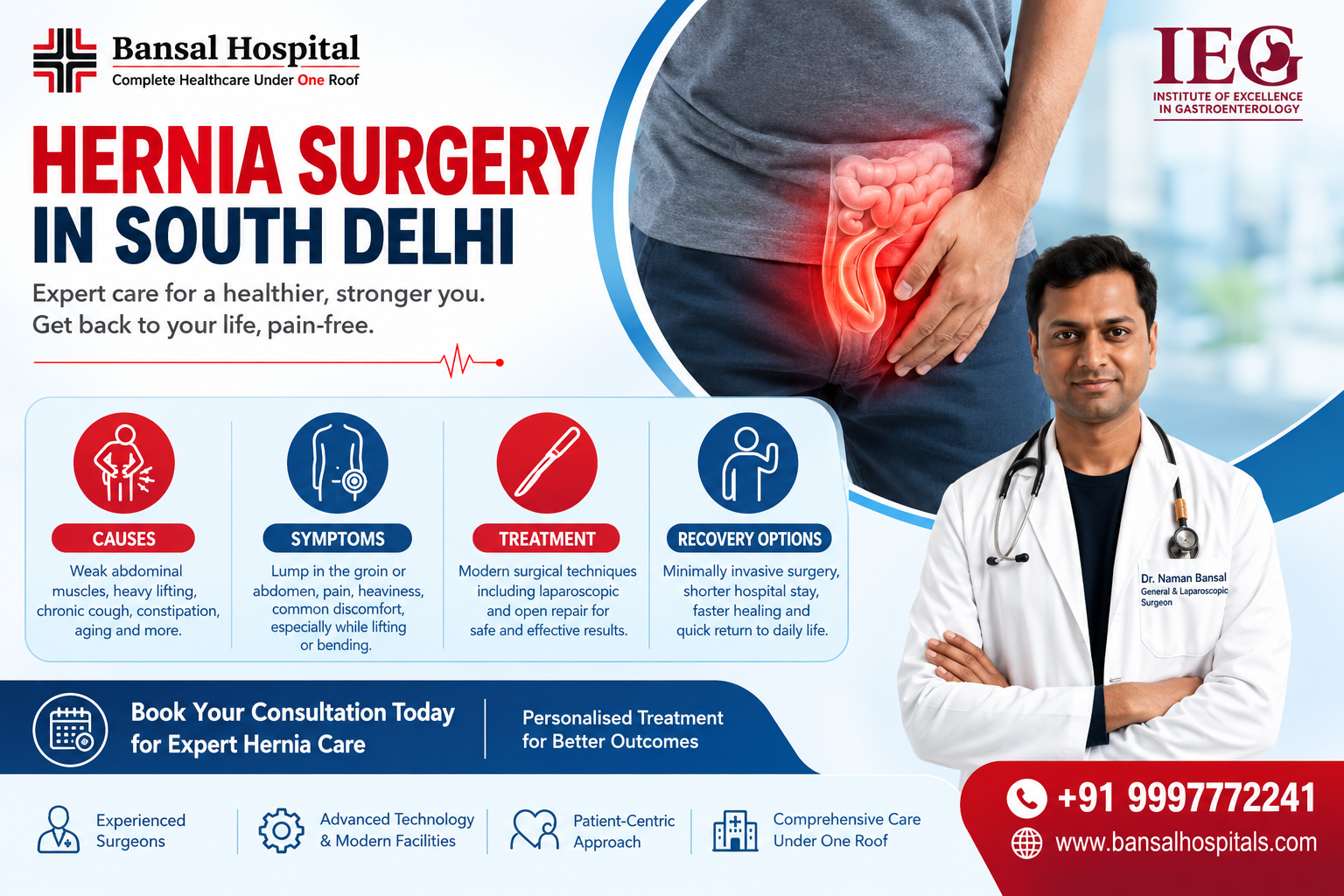
Hernia Surgery in South Delhi: Causes, Symptoms, Treatment, and Recovery
A hernia is a common medical condition that occurs when an internal organ or tissue pushes through a weak area in the surrounding muscle or connective tissue. It can develop in different parts of the body, including the abdomen, groin, and belly button. Although some hernias may initially cause only mild discomfort, timely medical evaluation is important to prevent potential complications.
If you are searching for Hernia Surgery in South Delhi, understanding the causes, symptoms, treatment options, and recovery process can help you make informed decisions about your health. Bansal Hospitals provides a starting point for exploring surgical care and discussing suitable treatment options with a qualified medical professional.
What Is a Hernia?
A hernia develops when tissue pushes through a weakened area of muscle or connective tissue. It often appears as a visible bulge that may become more noticeable while standing, coughing, lifting heavy objects, or straining.
Hernias do not usually disappear on their own. Depending on the type, size, symptoms, and risk of complications, a doctor may recommend monitoring or surgical repair.
Early diagnosis helps patients understand their condition and determine the most appropriate treatment plan.
Common Types of Hernia
Several types of hernias can affect adults. Identifying the type is essential for selecting the right treatment.
1. Inguinal Hernia
An inguinal hernia occurs when tissue protrudes through a weak area in the groin. It is one of the most common types of hernia and occurs more frequently in men. Patients may notice a groin bulge, discomfort, or pain that worsens during physical activity.
2. Umbilical Hernia
An umbilical hernia develops near the belly button when tissue pushes through the abdominal wall. It may occur in adults and children and can become more noticeable during coughing or straining.
3. Incisional Hernia
An incisional hernia develops at or near the site of a previous abdominal surgery. It can occur when the surgical area does not heal with sufficient strength.
4. Femoral Hernia
A femoral hernia occurs near the upper thigh or groin and is more common in women than in men. Because it may carry a higher risk of complications, prompt medical assessment is important.
5. Hiatal Hernia
A hiatal hernia occurs when part of the stomach moves upward through the diaphragm. It may contribute to acid reflux, heartburn, and other digestive symptoms. Treatment depends on the severity of symptoms and the patient’s overall condition.
Symptoms of a Hernia You Should Not Ignore
Hernia symptoms can vary according to the location and severity of the condition. Some patients may experience no noticeable symptoms during the early stages, while others develop discomfort that affects daily activities.
Common symptoms include:
- A visible or palpable bulge in the abdomen or groin.
- Pain or discomfort while lifting, bending, coughing, or exercising.
- A feeling of pressure or heaviness in the affected area.
- Burning or aching sensations near the bulge.
- Discomfort that increases after prolonged standing or physical activity.
Seek emergency medical attention if a hernia suddenly becomes very painful, the bulge becomes hard or cannot be pushed back, or you develop vomiting, abdominal swelling, or difficulty passing stool or gas. These symptoms may indicate an incarcerated or strangulated hernia, which can require urgent surgery.
What Causes a Hernia?
Hernias can develop due to a combination of muscle weakness and increased pressure inside the abdomen. In some cases, the weakness is present from birth; in others, it develops over time.
Common contributing factors include:
- Heavy lifting with improper technique.
- Chronic coughing or frequent straining.
- Constipation and repeated straining during bowel movements.
- Pregnancy and increased abdominal pressure.
- Excess body weight.
- Age-related weakening of muscles and tissues.
- Previous abdominal surgery.
- A family history of certain types of hernia.
Although some risk factors cannot be avoided, maintaining a healthy weight, treating persistent constipation, and using proper lifting techniques may help reduce strain on the abdominal wall.
Hernia Surgery in South Delhi: Available Treatment Options
The appropriate treatment depends on the hernia’s type, size, symptoms, and the patient’s medical history. A surgeon will examine the affected area and may recommend imaging tests when necessary.
1. Open Hernia Surgery
Open hernia repair involves making an incision near the affected area to return the protruding tissue to its proper position and repair the weakened section. Surgical mesh may be used to reinforce the abdominal wall when appropriate.
This approach may be suitable for different types of hernias, depending on the individual case.
2. Laparoscopic Hernia Surgery
Laparoscopic hernia surgery is a minimally invasive procedure performed through small incisions using a camera and specialised surgical instruments. The surgeon repairs the weakened area, often using mesh where indicated.
Potential benefits may include smaller incisions, less postoperative discomfort in selected patients, and a quicker return to normal activities compared with some open procedures. However, outcomes depend on the hernia type, surgical technique, and individual health factors.
3. Robotic-Assisted Hernia Repair
At centres where the technology and expertise are available, robotic-assisted surgery may be considered for selected patients. It uses specialised instruments controlled by the surgeon to perform the repair.
Robotic surgery is not necessary for every hernia, and the most appropriate technique should be determined through an individual consultation.
Why Choose a Qualified Laparoscopic Surgeon in South Delhi?
Selecting an experienced surgeon is an important step when considering hernia treatment. Patients searching for a Laparoscopic Surgeon in South Delhi should look for a qualified medical professional who can evaluate their condition and explain the benefits, limitations, and risks of available surgical approaches.
A suitable surgeon can help patients understand:
- Whether surgery is necessary based on the type and symptoms of the hernia.
- Whether laparoscopic or open repair is more appropriate.
- The expected recovery period and postoperative care requirements.
- The potential risks and benefits of using surgical mesh.
- The precautions needed to prevent complications and support healing.
A personalised treatment plan is particularly important for patients with recurrent hernias, previous abdominal surgeries, or other medical conditions.
How to Choose the Best Laparoscopic Surgery Hospital in South Delhi
Choosing the Best Laparoscopic Surgery Hospital in South Delhi involves more than comparing hospital names. Patients should consider the quality of surgical expertise, available facilities, anaesthesia support, infection-control practices, and postoperative care.
Here are several factors to consider when selecting a hospital for hernia surgery:
Experienced surgical team: Look for appropriately qualified surgeons with relevant experience in hernia repair and minimally invasive procedures.
Diagnostic facilities: Access to appropriate clinical examinations and imaging can help doctors assess the hernia and plan treatment.
Modern surgical infrastructure: Well-equipped operating rooms and suitable laparoscopic equipment can support minimally invasive procedures when indicated.
Anaesthesia and patient safety: Qualified anaesthesia professionals and established patient-monitoring protocols are important parts of safe surgical care.
Postoperative support: Clear discharge instructions, follow-up appointments, wound-care guidance, and access to medical assistance contribute to recovery.
Patients considering Bansal Hospitals can visit the official website at https://bansalhospitals.com/ to explore available services and contact the hospital for information about hernia treatment, surgical consultations, and appointment arrangements.
How to Prepare for Hernia Surgery
Proper preparation helps patients understand the procedure and reduce avoidable risks. Before surgery, the medical team may recommend the following steps:
- Complete a medical evaluation: Inform your doctor about existing medical conditions, previous surgeries, allergies, and all medications or supplements you take.
- Follow fasting instructions: If general anaesthesia is planned, follow the hospital’s instructions about when to stop eating and drinking.
- Review your medications: Ask your doctor whether any medicines need adjustment before surgery. Do not stop prescribed medication without medical advice.
- Arrange support at home: Depending on the procedure and anaesthesia, you may need someone to accompany you and help during the initial recovery period.
- Discuss expectations: Ask your surgeon about the procedure, possible complications, pain management, and the expected time away from work.
Your surgical team will provide instructions tailored to your health and the planned procedure.
Recovery After Hernia Surgery
Recovery depends on the type of hernia, the surgical technique, and the patient’s general health. Many patients can gradually resume light activities soon after uncomplicated hernia repair, but complete recovery may take longer.
Following surgery, patients should:
- Take prescribed medicines according to medical instructions.
- Keep the incision clean and follow wound-care guidance.
- Walk gently and increase activity as advised.
- Avoid heavy lifting and strenuous exercise until the surgeon gives permission.
- Attend scheduled follow-up appointments.
- Contact the medical team if pain, swelling, redness, or other symptoms worsen.
Seek urgent medical attention for severe abdominal pain, persistent vomiting, fever with concerning symptoms, difficulty passing urine, or significant wound problems.
Following your surgeon’s recommendations can support healing and help you return to your normal routine safely.
Can Hernias Be Prevented?
Not all hernias can be prevented, especially those associated with congenital weakness or previous surgery. However, certain lifestyle measures may reduce pressure on the abdominal wall.
Maintaining a healthy weight, eating a fibre-rich diet, drinking sufficient water, treating chronic coughing, and avoiding repeated straining may help. When lifting heavy objects, use proper technique and seek assistance when necessary.
If you notice a new bulge or persistent discomfort, arrange a medical assessment instead of relying on home remedies or abdominal supports as a substitute for appropriate treatment.
Frequently Asked Questions About Hernia Surgery
1. Is hernia surgery always necessary?
Not every hernia requires immediate surgery. Some asymptomatic or minimally symptomatic hernias may be monitored under medical supervision. However, many symptomatic hernias require surgical evaluation, and certain types need more prompt treatment.
2. Is laparoscopic hernia surgery better than open surgery?
Neither approach is universally better. Laparoscopic repair may offer benefits such as smaller incisions and faster recovery in selected cases. Open surgery may be more suitable for other patients. The decision depends on the hernia, medical history, and surgeon’s assessment.
3. How long does recovery take after hernia surgery?
Recovery varies by procedure and individual health. Many patients resume light activities within days, while strenuous exercise and heavy lifting may need to be avoided for several weeks or longer. Follow your surgeon’s specific advice.
4. Can a hernia return after surgery?
Yes, recurrence is possible. The risk depends on factors such as the type of hernia, surgical technique, tissue quality, and individual health. Following postoperative instructions and attending follow-up visits are important.
5. How do I find hernia treatment in South Delhi?
Start by consulting a qualified surgeon who regularly evaluates hernias. Ask about available surgical techniques, hospital facilities, estimated costs, recovery expectations, and follow-up care before making a decision.
Hernias can cause discomfort, interfere with everyday activities, and occasionally lead to serious complications. Recognising the symptoms and obtaining timely medical advice can help patients understand their options and avoid unnecessary delays in treatment.
If you are looking for Hernia Surgery in South Delhi, consult a qualified surgeon to determine whether open repair, laparoscopic surgery, or another treatment approach is suitable for your condition. When comparing hospitals, consider surgical expertise, patient safety, diagnostic facilities, and continuity of care.
For further information about available medical services and consultations, visit Bansal Hospitals and contact the hospital directly to discuss your treatment needs.