

Your liver works silently every day—helping your body digest food, process nutrients, remove toxins, and perform many other essential functions. But when the liver is repeatedly damaged over a long period, healthy liver tissue can gradually become scarred. This condition is known as liver cirrhosis.
Cirrhosis does not usually develop overnight. It can progress slowly due to conditions such as chronic hepatitis, excessive alcohol consumption, fatty liver disease, and other long-term liver problems. In the early stages, a person may not experience any noticeable symptoms, which is why regular medical evaluation becomes important when there is a risk of liver disease.
The right treatment depends on what caused the liver damage and how advanced the cirrhosis is. With timely diagnosis and appropriate management, further liver damage and serious complications may be reduced.
What Is Liver Cirrhosis?
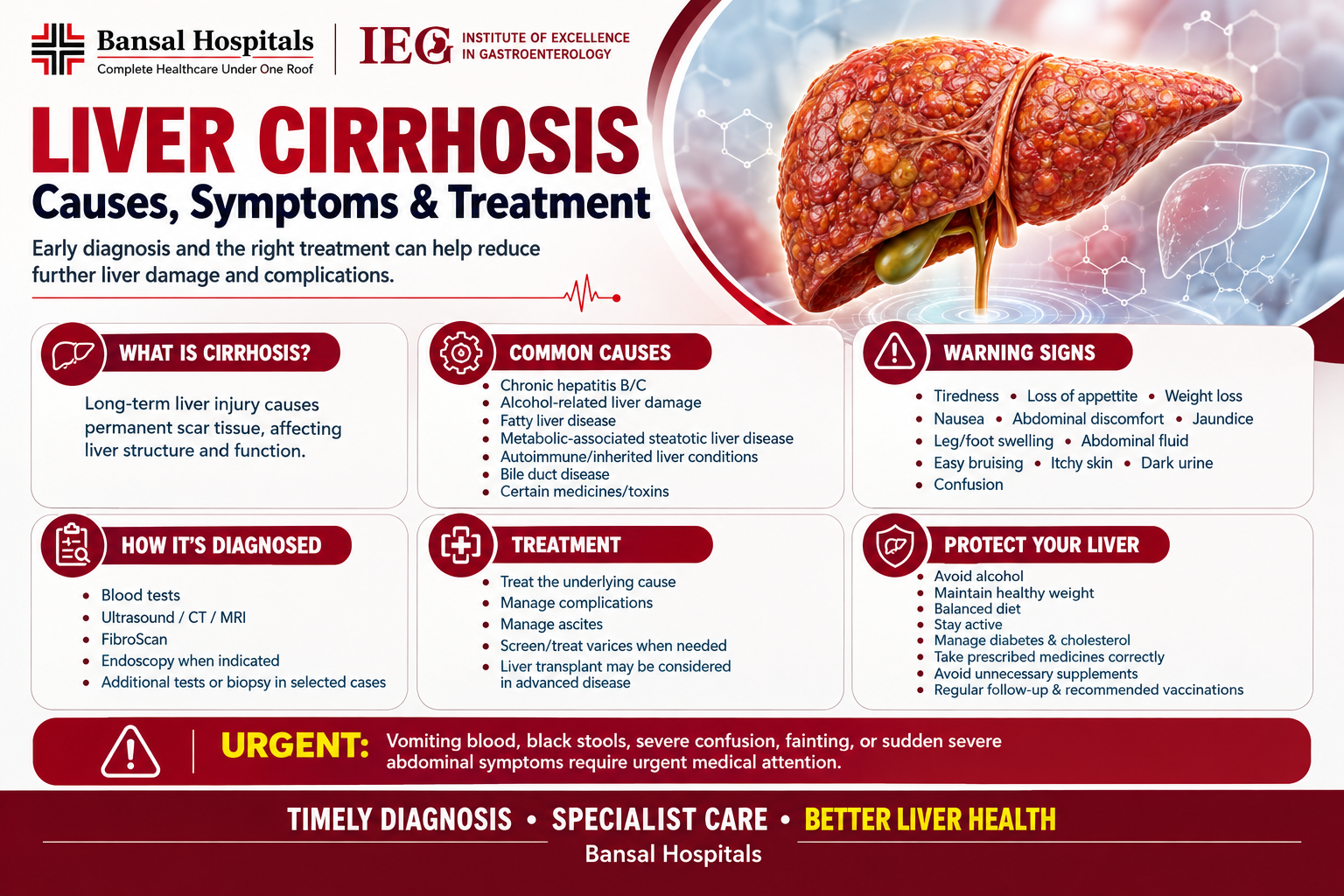
Liver cirrhosis is a condition in which long-term liver injury causes permanent scar tissue to develop in the liver.
As the amount of scar tissue increases, the normal structure and function of the liver can become affected. Blood may have difficulty flowing through the liver, and the liver may gradually become less effective at performing its normal functions.
Cirrhosis can develop because of several different conditions, so finding the underlying cause is an important first step in treatment.
What Causes Liver Cirrhosis?
There is no single cause of cirrhosis. Some of the common causes include:
- Chronic hepatitis B or hepatitis C
- Long-term alcohol-related liver damage
- Fatty liver disease
- Metabolic-associated steatotic liver disease
- Autoimmune liver diseases
- Certain inherited liver conditions
- Long-term diseases affecting the bile ducts
- Certain medications or toxic substances
- Other conditions that cause prolonged liver injury
A person may have more than one risk factor, which makes a proper medical evaluation particularly important.
Signs and Symptoms of Liver Cirrhosis
Cirrhosis can remain unnoticed during its early stages. As liver function becomes affected, symptoms may gradually appear.
Some possible signs include:
- Persistent tiredness
- Loss of appetite
- Unexplained weight loss
- Nausea
- Abdominal discomfort
- Yellowing of the eyes or skin
- Swelling of the legs and feet
- Fluid accumulation in the abdomen
- Easy bruising
- Itchy skin
- Dark-coloured urine
- Confusion or changes in alertness
Not everyone with cirrhosis develops the same symptoms. If you already have liver disease and notice a change in your health, speaking with a specialist is important.
How Is Liver Cirrhosis Diagnosed?
Diagnosing cirrhosis involves more than one test. Your doctor may first discuss your medical history, lifestyle, medications, previous infections, and existing health conditions.
Depending on your symptoms and risk factors, investigations may include:
Blood Tests
Blood tests can provide information about liver function and may help identify inflammation, infection, abnormal clotting, or other changes associated with liver disease.
Ultrasound and Imaging
An ultrasound can help doctors examine the liver and look for changes associated with chronic liver disease. CT or MRI may be recommended when more detailed imaging is required.
FibroScan
A FibroScan is a non-invasive test that can help assess liver stiffness and provide information about fibrosis in suitable patients.
Endoscopy
In people with advanced cirrhosis, doctors may recommend an upper gastrointestinal endoscopy to check for enlarged veins, known as varices, which can develop due to increased pressure in the portal vein.
Additional Tests
In selected cases, additional blood tests or a liver biopsy may be considered to understand the cause or extent of liver damage.
Best Doctor for Liver Cirrhosis Treatment in Delhi: Getting the Right Care
When someone is diagnosed with cirrhosis, treatment should be based on the individual’s condition rather than following a one-size-fits-all approach.
At Bansal Hospitals, patients can receive evaluation and management for liver-related conditions with a focus on identifying the cause, assessing the severity of liver damage, monitoring complications, and planning appropriate treatment.
For someone searching for the Best Doctor for Liver Cirrhosis Treatment in Delhi, the important thing is not simply choosing a doctor based on a title. It is about finding appropriate specialist care, accurate diagnosis, regular monitoring, and a treatment plan suited to the patient’s condition.
Bansal Hospitals provides specialist-led care for patients dealing with liver conditions and aims to support patients throughout their treatment journey.
Liver Cirrhosis Treatment: What Are the Options?
Treatment for cirrhosis depends on its cause and stage. The main objective is to control the underlying condition, prevent additional liver damage, and manage complications.
Treating the Underlying Cause
If cirrhosis has developed because of viral hepatitis, appropriate antiviral treatment may be required.
For people with fatty liver disease, managing weight, diabetes, cholesterol, and other metabolic risk factors can be an important part of treatment.
For alcohol-related liver disease, avoiding alcohol completely is an essential step in preventing further liver damage.
Managing Cirrhosis-Related Complications
Cirrhosis can sometimes cause complications such as fluid accumulation, bleeding from varices, or changes in brain function.
Doctors may use medicines, dietary changes, endoscopic procedures, or other treatments depending on the complication and its severity.
Managing Ascites
Ascites refers to the accumulation of fluid in the abdomen. Depending on the condition, treatment may include dietary changes, prescribed medicines, and procedures to remove excess fluid.
Treating Varices
Increased pressure in the portal venous system can cause enlarged veins in the oesophagus or stomach. These veins can sometimes bleed, so appropriate screening and preventive treatment may be recommended for patients at risk.
Liver Transplantation
When cirrhosis becomes advanced and the liver can no longer function adequately, a liver transplant may be considered.
Not every person with cirrhosis requires transplantation. A specialist team evaluates the severity of the disease and the patient’s overall health before recommending this option.
Can Liver Cirrhosis Be Reversed?
This is one of the most common questions patients ask.
Established cirrhosis generally involves significant scarring that cannot simply be removed. However, treating the underlying cause can help prevent additional damage and, in some situations, improve liver function.
For this reason, discovering and treating liver disease before it reaches an advanced stage can make a major difference.
Lifestyle Changes That Can Help Protect the Liver
Along with medical treatment, everyday habits can play an important role in liver health.
Depending on your doctor’s advice, you may need to:
- Completely avoid alcohol
- Maintain a healthy weight
- Follow a balanced diet
- Stay physically active
- Manage diabetes and cholesterol
- Take prescribed medicines correctly
- Avoid unnecessary supplements or herbal products
- Attend regular follow-up appointments
- Follow recommended vaccination schedules
Never start a new supplement or herbal treatment without discussing it with your doctor, particularly if you already have liver disease.
Can a Person Live With Liver Cirrhosis?
Yes, many people with cirrhosis can live for years, particularly when the disease is identified early and properly managed.
The outlook depends on several factors, including the cause of cirrhosis, liver function, the presence of complications, and the person’s overall health.
Regular follow-up allows doctors to monitor changes in liver function and identify complications as early as possible.
When Should You Consult a Doctor?
Do not ignore symptoms such as persistent jaundice, abdominal swelling, unexplained weight loss, unusual bleeding, or continuing weakness.
If you have already been diagnosed with fatty liver disease, hepatitis, or another chronic liver condition, regular monitoring can help identify progression before serious complications develop.
Vomiting blood, black stools, severe confusion, fainting, or sudden severe abdominal symptoms require urgent medical attention.
Why Early Treatment Matters
Liver cirrhosis is a serious condition, but it does not mean that nothing can be done. Identifying the cause, controlling ongoing liver damage, monitoring liver function, and treating complications can all play an important role in long-term care.
If you are looking for the Best Doctor for Liver Cirrhosis Treatment in Delhi, Bansal Hospitals provides specialist evaluation and comprehensive care for patients with liver-related conditions.
The most important step is not to ignore warning signs. Early evaluation can help identify liver problems at a stage when appropriate treatment and lifestyle changes may help prevent further progression.
Frequently Asked Questions
What is the main treatment for liver cirrhosis?
There is no single treatment for every patient. Management focuses on treating the underlying cause, preventing further liver damage, managing complications, and considering transplantation when the disease becomes advanced.
Can fatty liver lead to cirrhosis?
Yes. In some people, long-term fatty liver disease can progress to inflammation and fibrosis and eventually develop into cirrhosis.
Is alcohol completely prohibited in cirrhosis?
People with alcohol-related liver disease should stop drinking alcohol. Patients with cirrhosis should discuss alcohol use with their doctor because continued alcohol consumption can worsen liver damage.
Which specialist treats cirrhosis?
A gastroenterologist or hepatologist generally manages liver cirrhosis. Advanced cases may require a multidisciplinary team involving liver and transplant specialists.
Does every cirrhosis patient need a liver transplant?
No. Many patients can be managed with treatment and regular monitoring. Transplantation is considered when liver disease becomes advanced or the liver is no longer able to function adequately.
How can I protect my liver?
Maintaining a healthy weight, avoiding alcohol, controlling diabetes and cholesterol, avoiding unnecessary medicines or supplements, and getting appropriate medical check-ups can support liver health.
Bansal Hospitals — Supporting Better Liver Health Through Timely Diagnosis and Specialist Care.